Its story began in the thirteenth year of Yixi in the Eastern Jin dynasty. In 417, after Liu Yu’s northern expedition against Later Qin, the finest brocade artisans of Chang’an were moved to Jiankang, where the Douchang Brocade Office was established. This marked the official beginning of Nanjing Yunjin weaving. Northern and southern weaving traditions met here, and the ornate language of gold-thread brocade took root in Jinling.
In the Yuan dynasty, Yunjin formally entered the imperial stage. The court established dedicated weaving and dyeing bureaus and pioneered gold-thread weaving, winding hammered gold foil around silk thread to create a rich and opulent surface for imperial robes and ceremonial objects. From then on, the saying “brocade is valued like gold” began to spread.
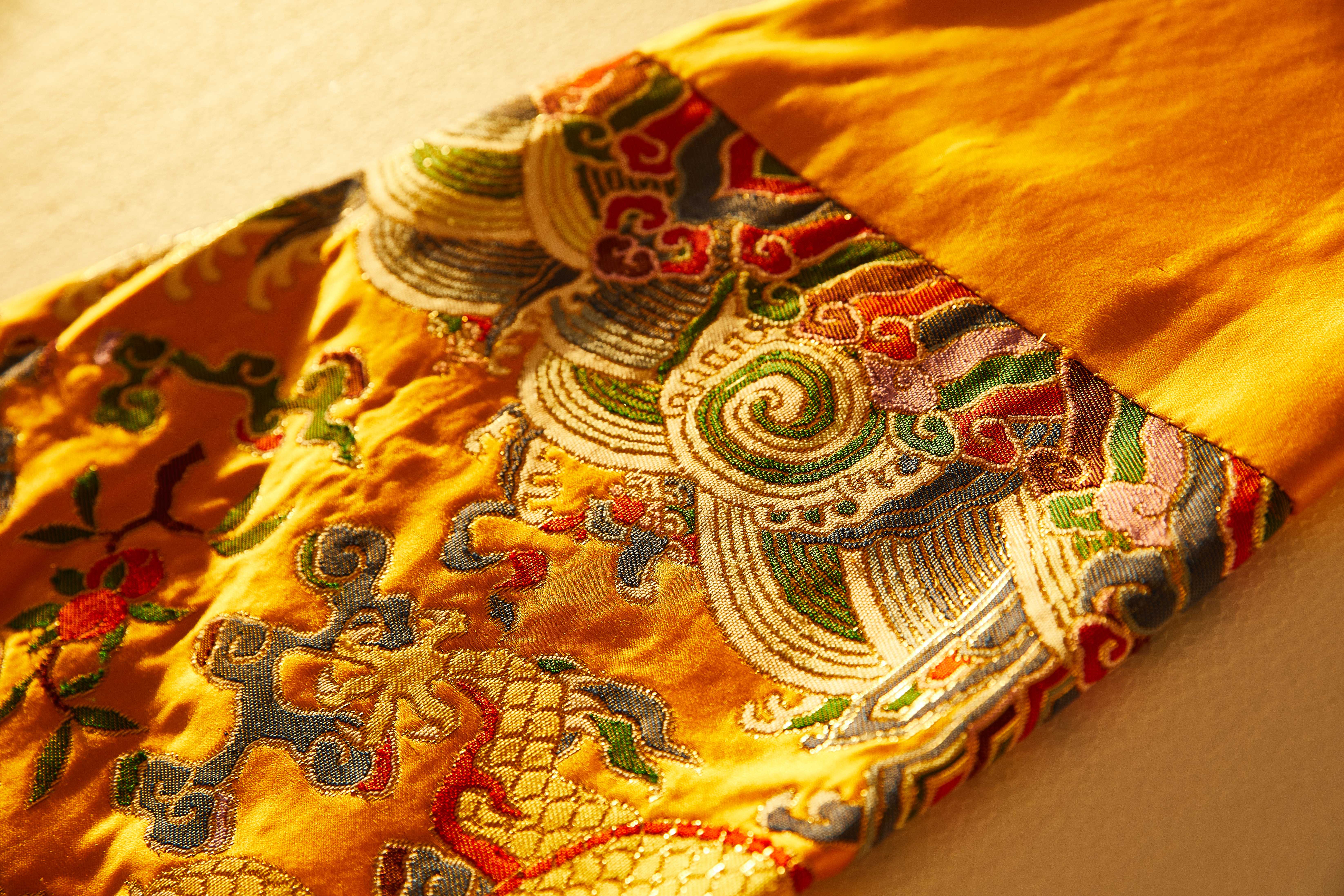
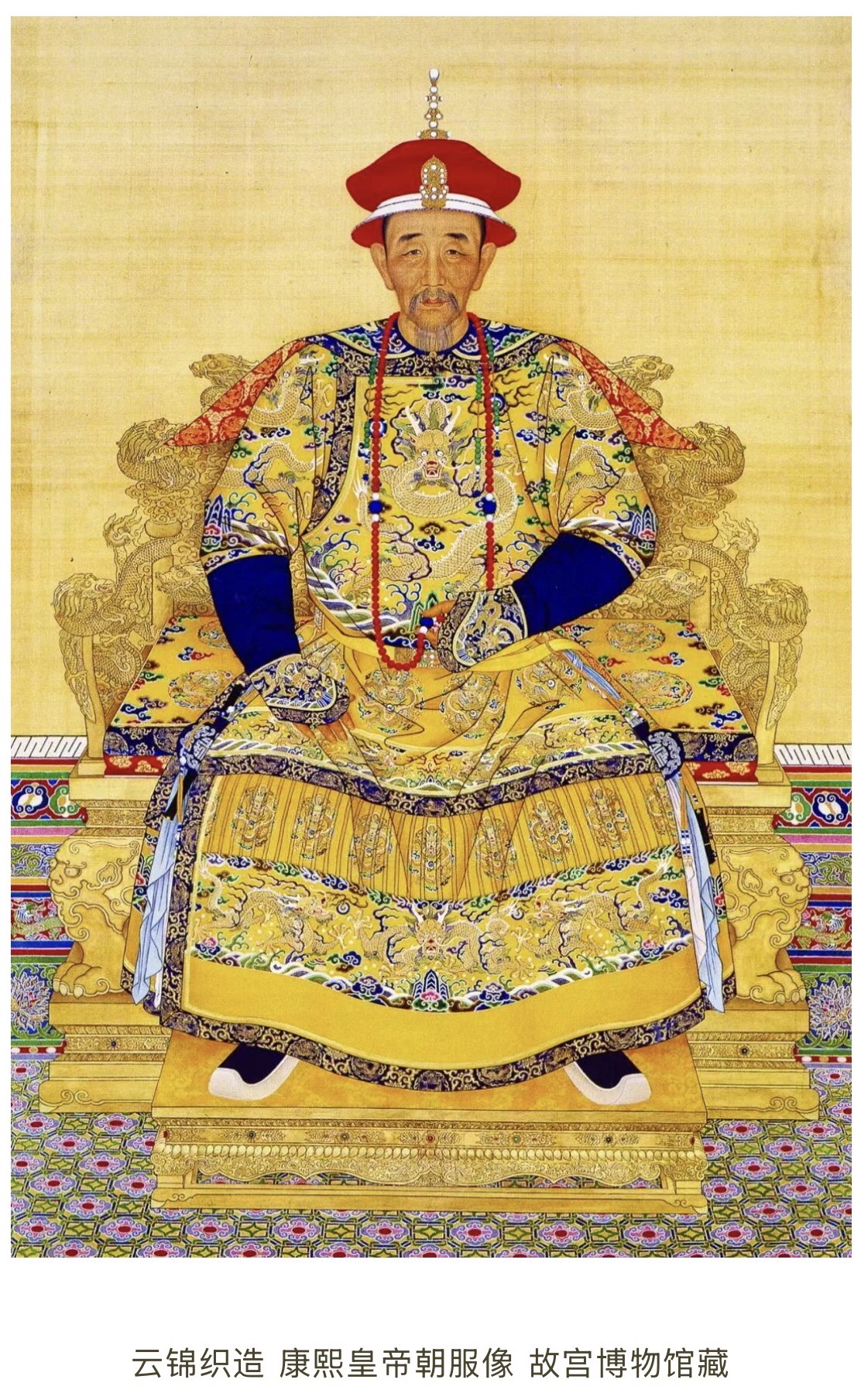
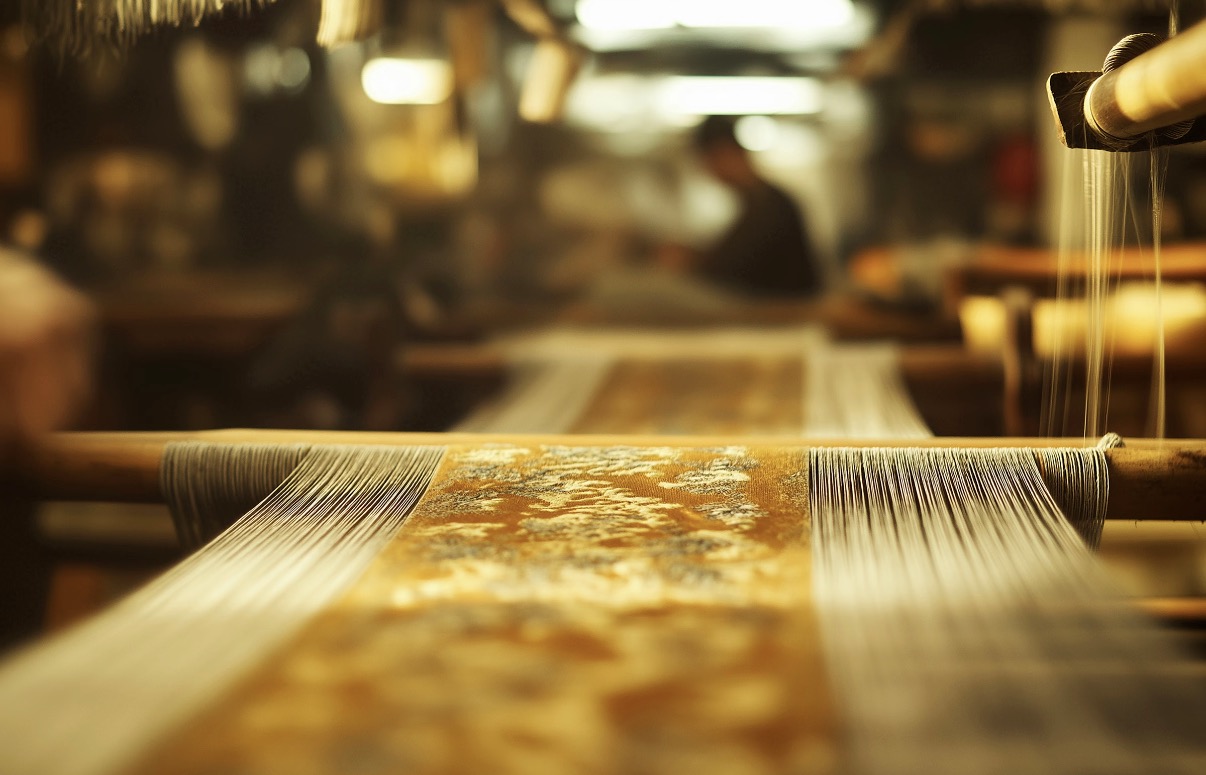
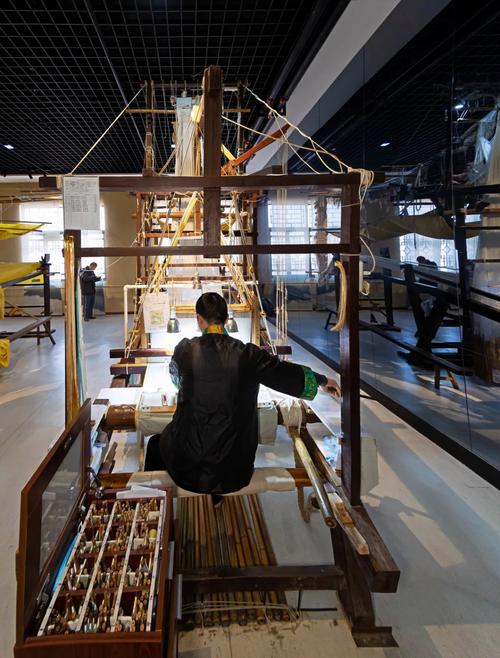
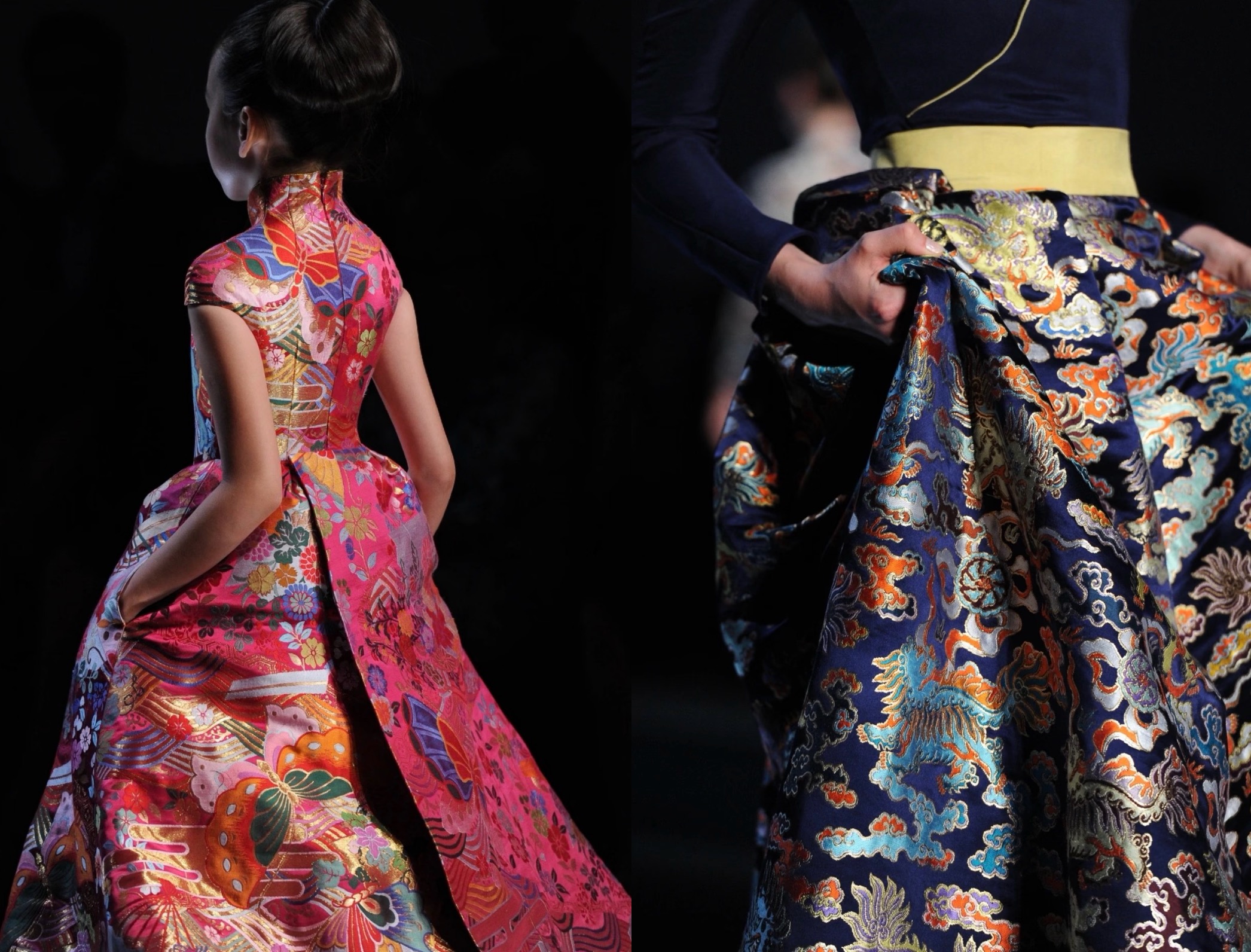
The Ming dynasty marked the height of Yunjin technique. The unrivaled zhuanghua method emerged, using the distinctive principle of “continuous warp, discontinuous weft, and different colors for each motif.” A four-meter-high dalou wooden loom required two artisans working together: one above to lift the pattern cords, and one below to pass the shuttles and apply color. A full day’s work could produce only five or six centimeters of fabric. Peacock feathers, red gold, and jewel-toned silks were all worked into the material. Dragon robes and court garments came from this loom, their intricate patterns filled with auspicious Eastern meanings of dragons, phoenixes, and good fortune.
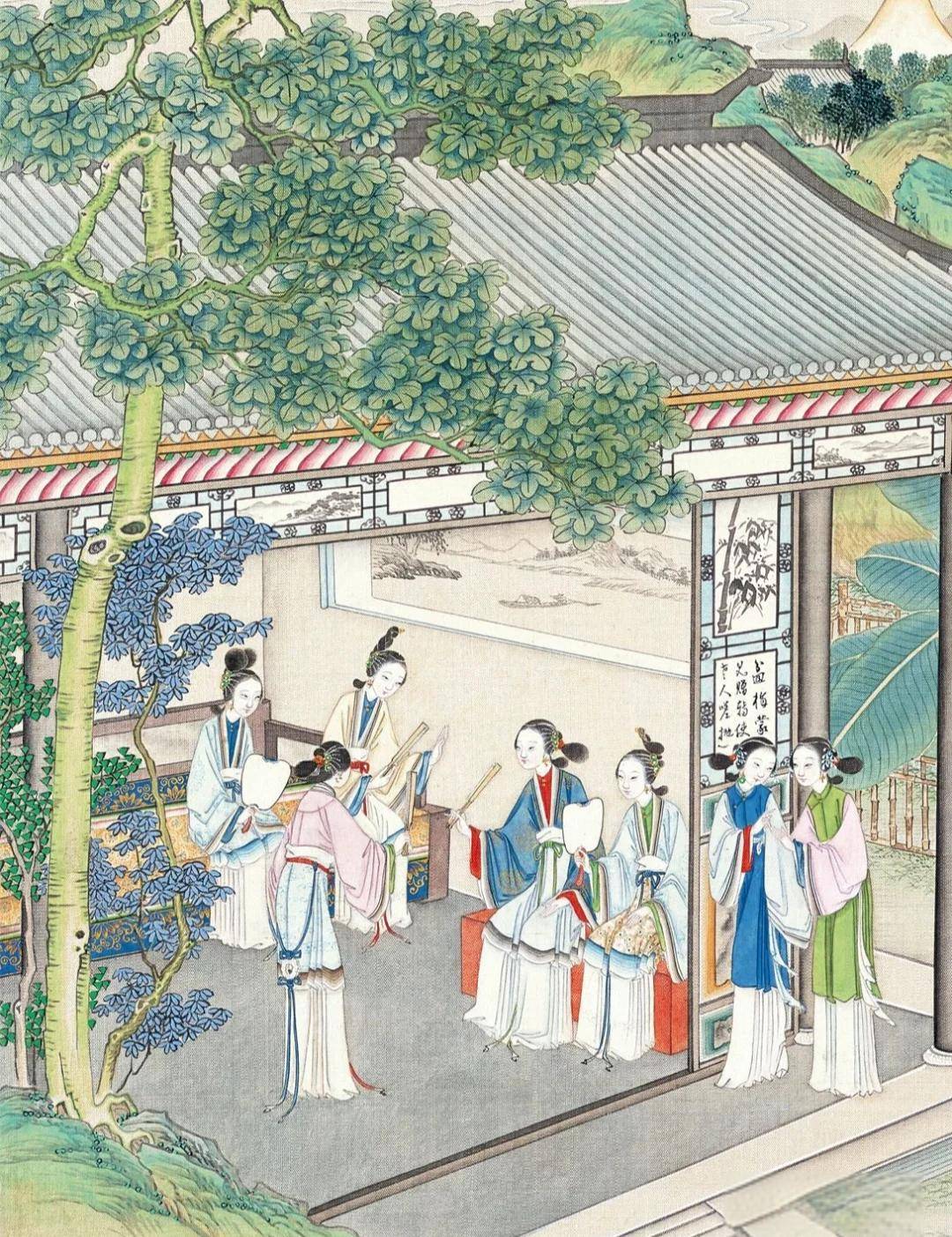
During the Kangxi and Qianlong reigns of the Qing dynasty, the sound of looms along the Qinhuai River continued through the night. More than 30,000 looms operated across the city, and 200,000 people made their living from brocade weaving. Cao Xueqin’s family managed the Jiangning Weaving Office for three generations; the luxurious fabrics worn by Daiyu and Wang Xifeng in Dream of the Red Chamber were inspired by Yunjin. It was used not only within the imperial court, but also sent overseas as a state gift, becoming prized by European royal families.